
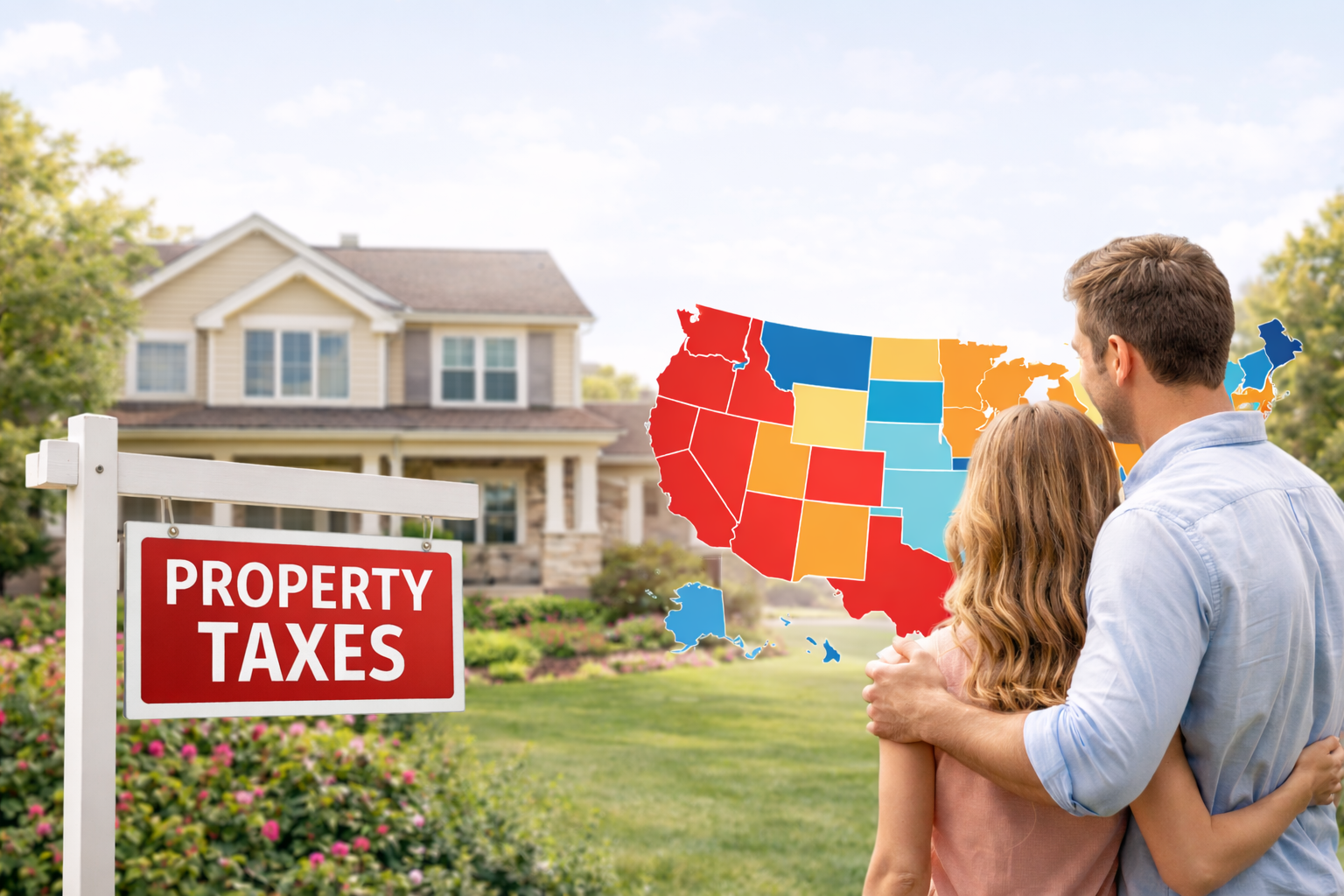
How property taxes differ across the U.S., what drives those differences, and what buyers should know before purchasing a home
Understanding Property Taxes: What Varies State to State
Refinancing Your Mortgage in Texas: When It’s Smart and How to StartHow Homeownership Fits Into a Broader Financial Plan
Understanding how property taxes work, why they differ across states and counties, and what drives higher or lower tax bills can help buyers make informed decisions before purchasing a home.
Why Property Taxes Matter
Property taxes are the primary funding source for local governments across the United States. In fiscal year 2022, property taxes accounted for 27.4% of total state and local tax collections, more than any other tax category. At the local level, they made up over 70% of local government tax revenue.
These taxes fund essential community services, including:
- Public schools (K–12 education)
- Police and fire departments
- Roads and infrastructure
- Emergency medical services
- Parks, libraries, and local utilities
Because property taxes are levied almost entirely at the local level, rates and bills can differ dramatically not just between states, but between neighboring counties and even cities.

Why Property Taxes Vary So Much by State
Several factors explain why property taxes are higher in some states than others:
1. Reliance on Property Taxes vs. Other Taxes
States like Texas and New Hampshire rely heavily on property taxes because they have no state income tax. In contrast, states that generate more revenue through income or sales taxes may place less emphasis on property taxes.
Meanwhile, states like New Jersey and Illinois combine high property taxes with relatively high income and sales taxes, resulting in higher overall tax burdens.
2. Local Control
Property taxes are typically set by counties, cities, school districts, and special taxing authorities. This decentralized system means communities that provide more services or have higher operating costs often levy higher taxes.
3. Home Values
Because property taxes are assessed as a percentage of home value, areas with higher housing prices, especially urban centers tend to have higher property tax bills.
However, higher home values alone don’t fully explain the differences. Local tax rates (often called millages) can be adjusted to generate more or less revenue regardless of property values.
Property Taxes by County: A Wide Gap
Across the U.S., the average countywide property tax bill in 2023 was $1,889, but this number hides enormous variation.
Lowest Property Tax Counties
Some counties report median property taxes below $250 per year, including areas in:
- Alabama
- Louisiana
- South Dakota
- Alaska (many regions have no property taxes at all)
Highest Property Tax Counties
At the other extreme, several counties report median tax bills exceeding $10,000 annually, including:
- Parts of New Jersey
- Suburban New York counties near NYC
- Marin County, California
- Falls Church City, Virginia
These high-tax counties are typically located near major metropolitan areas where housing prices and government service costs are significantly higher.
Property Taxes by State: Urban vs. Rural Differences
Property tax burdens can vary dramatically within the same state.
For example:
- Alabama: Median property taxes range from under $200 in rural counties to over $1,300 in metro areas.
- Virginia: Median property taxes range from $404 in rural counties to more than $10,000 in urban jurisdictions near Washington, D.C.
Urban areas like Manhattan, San Francisco, Chicago, and Miami often have property tax bills two to three times higher than their state averages, driven by higher home values and service costs.
Effective Property Tax Rates: A Better Comparison Tool
To compare states more fairly, analysts often use effective property tax rates, calculated as the property tax paid divided by the home’s value.
Highest Effective Property Tax Rates (2023)
- New Jersey: 2.23%
- Illinois: 2.07%
- Connecticut: 1.92%
Lowest Effective Property Tax Rates (2023)
- Hawaii: 0.27%
- Alabama: 0.38%
- Nevada: 0.49%
- Colorado: 0.49%
- South Carolina: 0.51%
This approach helps account for differences in home values and provides a clearer picture of relative tax burdens.

How Property Taxes Are Calculated
Property taxes aren’t calculated the same way everywhere. Key differences include:
Assessment Methods
- Some jurisdictions tax 100% of market value
- Others apply an assessment ratio (taxing only a portion of the value)
Millage Rates
Millage rates represent the tax per $1,000 of assessed value and vary widely across jurisdictions.
Reassessments
Some areas reassess property values annually, while others do so less frequently, affecting how quickly taxes rise as home values increase.
Exemptions, Caps, and Relief Programs
Many states offer programs that reduce property tax burdens for certain homeowners, including:
- Senior citizens
- Veterans
- Disabled homeowners
- Primary residences (homestead exemptions)
Some states also limit how much property taxes can increase annually, even if home values rise significantly.
Residential vs. Commercial Property Taxes
Residential properties are often taxed at lower rates than commercial properties. However, apartment buildings are usually classified as commercial property, meaning renters indirectly bear higher property tax costs through rent.
What Homebuyers Should Know Before Buying
Before purchasing a home, buyers should:
- Research property tax rates by county and city
- Review recent tax bills for the property
- Understand reassessment schedules
- Factor taxes into monthly housing affordability
- Ask about exemptions they may qualify for
Final Thoughts
Property taxes play a crucial role in funding local communities, but they can vary dramatically depending on where you live. Understanding how property taxes are calculated, why they differ, and how they affect long-term homeownership costs can help buyers make smarter decisions and avoid surprises after closing.
Whether you’re buying your first home or relocating to a new state, factoring property taxes into your decision-making process is essential for long-term financial stability.
At First Nation Financial, we don’t just push paperwork, we partner with you, guide you step by step, and help you understand exactly what you need to do to qualify. We believe in second chances, creative solutions, and turning “not yet” into “let’s do this.”
So if you’ve been waiting until everything’s “perfect,” here’s your sign: it doesn’t have to be. What you need is someone who understands where you’re coming from and knows how to get you where you want to go.
Book a free consultation
Send us a message
Let’s turn your hard work into homeownership.