
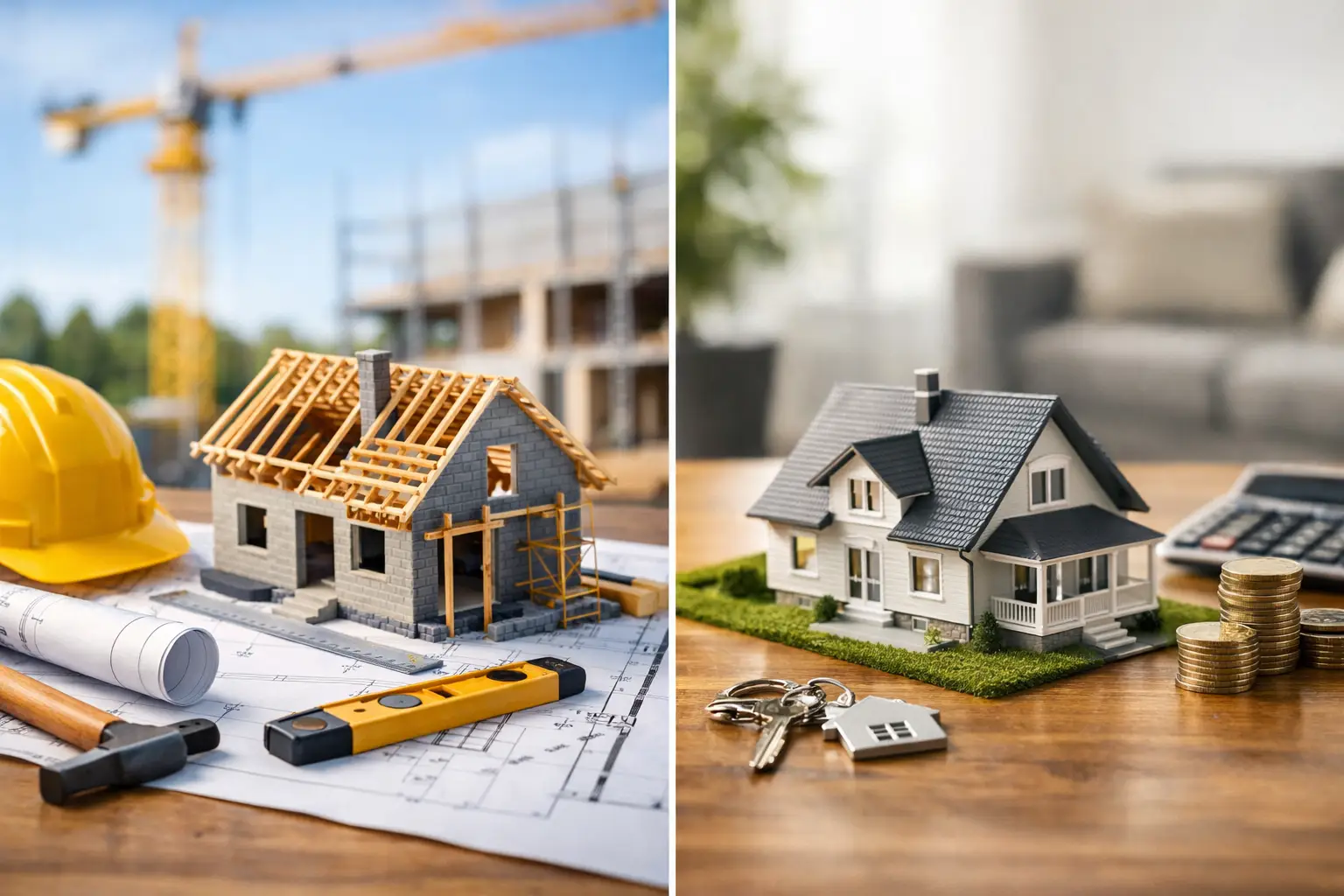
If you are trying to decide between a construction loan vs mortgage, the biggest difference is simple: one helps you build a home, and the other helps you buy one that already exists. That sounds straightforward, but the loan you choose affects your down payment, your monthly payments, your timeline, and even how stressful the process feels. For many borrowers, especially first-time buyers and working families watching every dollar, getting this choice right matters.
A traditional mortgage is what most people know. You find a completed home, agree on a purchase price, and borrow money to buy it. A construction loan works differently. It is designed to fund the building process in stages, not hand over the full amount on day one. Because the lender is financing a home that does not exist yet, the rules are usually tighter.
Construction loan vs mortgage: the core difference
With a mortgage, the lender can evaluate a finished property, order an appraisal, and base the loan on a home that is already standing. That lowers uncertainty. The home can serve as clear collateral from the start.
With a construction loan, the lender is taking on more moving parts. They are reviewing your finances, but also your builder, the construction plans, the budget, the timeline, and the future value of the home once it is completed. Funds are usually released in draws as the work progresses. That means more oversight and more documentation.
This is why construction loans often have stricter qualification standards than standard mortgages. It is not because home building is a bad idea. It is because there is more risk during the build.
When a mortgage makes more sense
A mortgage is usually the better fit if you want a faster, simpler path to homeownership. If the house is already built and move-in ready, a standard home loan tends to come with fewer moving pieces. You can lock in your terms, close, and start making regular monthly payments on principal and interest.
For borrowers who want predictable costs, a mortgage often feels more manageable. You are not dealing with change orders, builder delays, inspections tied to draw schedules, or rising material costs. You are buying a property with a known condition and a known price.
That matters if you are stretching to qualify, using a low down payment program, or trying to keep cash reserves intact after closing. A mortgage generally offers a cleaner process and fewer surprises.
When a construction loan is the better tool
A construction loan may be the right fit if you cannot find the home you need on the market, or if you own land and want to build a home that fits your family and budget. In some areas, especially where resale inventory is tight or outdated, building can make more sense than waiting for the right house to appear.
It can also be a strong option if you want more control over layout, features, energy efficiency, or long-term maintenance costs. A newly built home may reduce repair issues in the early years compared with buying an older home.
Still, building is not always the cheaper route. Land costs, permits, labor, utility connections, and construction overruns can change the math quickly. A borrower may start with a budget that looks comfortable on paper and end up needing more cash than expected.
Approval standards are usually tougher for construction loans
This is where the construction loan vs mortgage comparison becomes very real for borrowers. A mortgage approval focuses heavily on your income, assets, credit, debts, and the property itself. A construction loan looks at all of that, plus the viability of the project.
Lenders often want to see a detailed building contract, construction timeline, approved plans, permits, and a licensed builder with solid experience. They may also require larger down payments and stronger reserves. If your credit is limited or your debt-to-income ratio is already close to the line, qualifying can be harder.
That does not mean construction financing is off the table. It means preparation matters more. Borrowers who organize their paperwork early and work with a lending team that knows how to structure these files usually have a smoother path.
Down payment and cash needs
A standard mortgage can come with low down payment options depending on the program. Some buyers may qualify for FHA, VA, USDA, or other solutions that reduce upfront cash needs. That flexibility is one reason mortgages are more accessible for many first-time buyers.
Construction loans often require more money upfront. In many cases, lenders want a larger equity contribution because of the added risk. If you already own the land, that equity may help. If you still need to buy the lot and finance the build, your cash requirement may be higher.
You also need to think beyond the down payment. Building a home can involve extra costs that buyers do not always expect, such as site work, plan revisions, permit fees, inspections, and temporary housing if you need a place to stay while construction is underway.
How payments work during the process
With a mortgage, your payment structure is straightforward after closing. You begin making monthly payments based on the full loan amount, usually including principal, interest, taxes, and insurance.
With a construction loan, payments during the build are often interest-only and based on the amount drawn so far, not the full approved loan amount. That can sound easier at first, but remember that this phase is temporary. Once construction is complete, the loan may convert into a permanent mortgage, or you may need a second closing to refinance the construction loan into a traditional home loan.
That transition is important. If rates change, or if your financial picture changes before the permanent financing is finalized, your next step may not look exactly like you expected. This is one of the biggest areas where good guidance matters.
Timeline and stress level
A mortgage transaction on an existing home can often move relatively quickly if the borrower is prepared and the property appraises. There are still documents, deadlines, and underwriting conditions, but the process is more familiar and usually shorter than building from the ground up.
Construction financing takes more patience. Even a well-managed project can run into weather delays, permit issues, supply chain problems, labor shortages, or inspection setbacks. If you need certainty on move-in timing, that can be a serious drawback.
This is not just a financial decision. It is also a lifestyle decision. Some borrowers are comfortable managing a longer timeline and handling the extra coordination. Others want the least complicated route possible. Neither choice is wrong. It depends on your tolerance for uncertainty and how much flexibility your family has.
Which option is more affordable?
There is no honest one-size-fits-all answer. A mortgage may be more affordable upfront because the down payment can be lower and the process may involve fewer variable costs. But if the resale market is highly competitive, buying an existing home could mean paying more for less space or taking on future repair bills.
A construction loan may help you create a home that better fits your needs, but the path usually requires more cash, more planning, and more approval hurdles. If your build stays on budget and the finished home appraises well, it can be a smart long-term move. If the project runs over budget, affordability can tighten fast.
This is where borrowers benefit from a real conversation instead of a generic online calculator. Loan structure, credit profile, land ownership, local building costs, and income stability all affect which option makes sense.
How to decide between a construction loan vs mortgage
Start with your real goal, not just the property type. If your priority is getting into a home quickly with the lowest barrier to entry, a mortgage is usually the stronger choice. If your priority is building a home tailored to your needs and you have the time, documentation, and financial cushion to support it, a construction loan may be worth pursuing.
It also helps to ask practical questions. Do you already have land? Do you have a licensed builder lined up? Can you handle unexpected costs without putting yourself in a bind? Would a delay create housing problems for your family? Are you trying to preserve as much cash as possible after closing?
For many borrowers, the best next step is not choosing the loan alone. It is choosing the right lending partner to walk through the numbers honestly. A team like First Nation Financial Corporation can help you compare programs, review qualification options, and see what fits your budget before you commit to the wrong path.
The right loan should make your next move possible, not harder than it needs to be.