
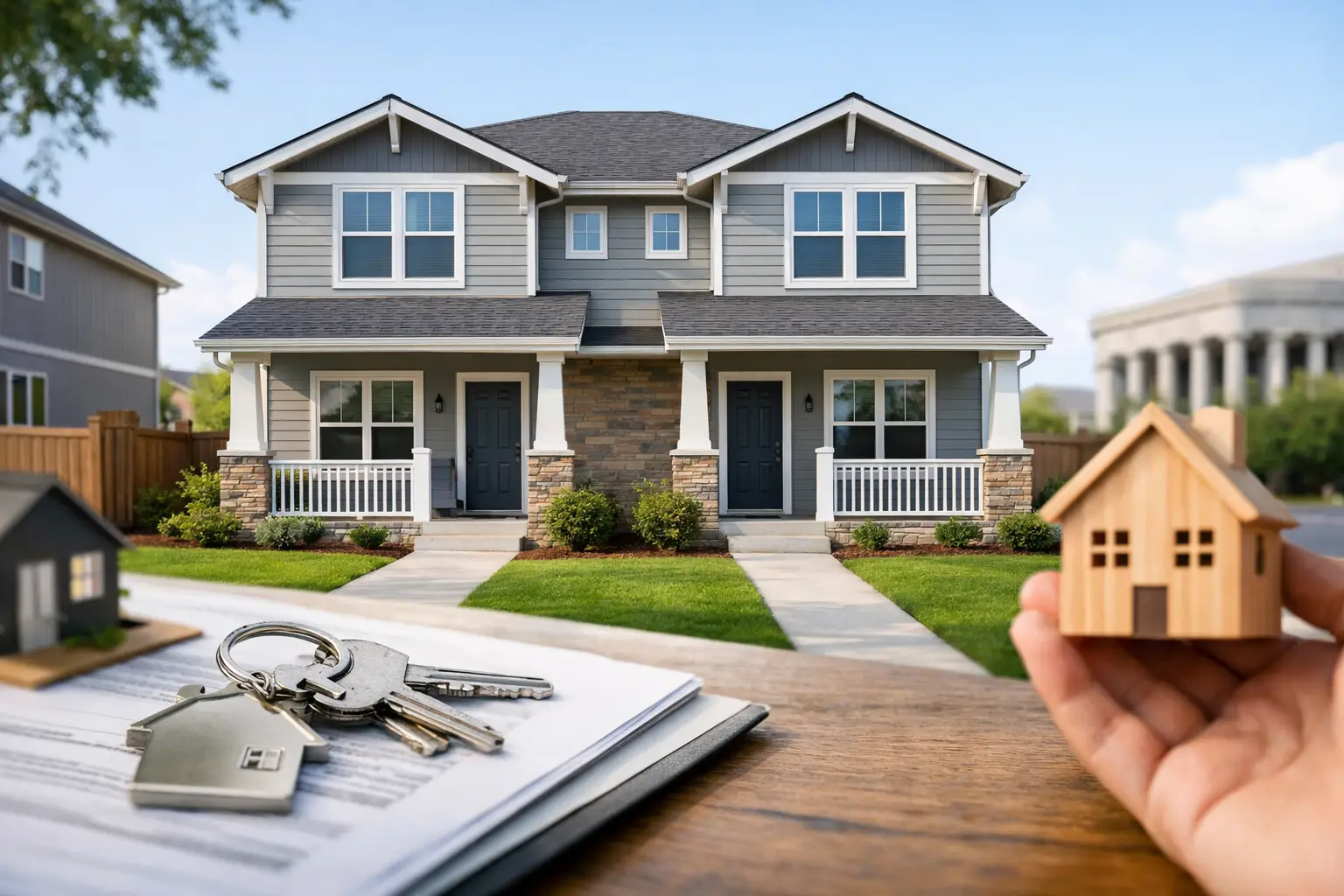
A duplex can do something a single-family home usually cannot – put a roof over your head while helping offset the mortgage with rental income. That is exactly why buying duplex with FHA loan gets so much attention from first-time buyers and working families trying to stretch their budget without taking on a huge down payment.
For the right borrower, it can be a smart path into homeownership and small-scale real estate investing at the same time. But it only works well if you understand the rules upfront, especially occupancy, financing limits, reserves, and the difference between qualifying on paper and being comfortable with the payment in real life.
Why buying duplex with FHA loan appeals to first-time buyers
FHA financing is popular because it can offer a lower down payment and more flexible credit standards than many conventional options. When you apply that to a duplex, the opportunity gets even more attractive. You are not just buying a place to live. You are buying a property with two units, living in one, and potentially collecting rent from the other.
That rental income can make a major difference for borrowers who have steady income but limited savings. It can also help buyers in higher-cost markets where a single-family home may already feel out of reach. In places like Texas and California, that matters.
Still, this is not a shortcut or a loophole. FHA allows owner-occupied multi-unit properties, but it expects you to actually live there. If your real plan is to buy a duplex and rent out both units from day one, FHA is generally not the right fit.
FHA occupancy rules for a duplex
The biggest rule is simple. You must intend to occupy one of the units as your primary residence. In most cases, FHA expects you to move in within 60 days of closing and live there for at least one year.
That owner-occupancy requirement is what makes the low down payment possible. FHA is designed to support homeownership, not pure investment purchases. So if you are buying a duplex with an FHA loan, think of it as buying your home first, with the added benefit of a rental unit.
This setup is often called house hacking. It can work very well, but it also means you become a landlord sooner than many buyers expect. That part deserves honest thought. Sharing a property line with a tenant may be financially helpful, but it is still a responsibility.
How much down payment do you need?
One of the main advantages of FHA is the minimum down payment. If you qualify, you may be able to put down as little as 3.5 percent. That is a big reason buyers look at duplexes through this program.
The catch is that a duplex costs more than a typical starter home, so 3.5 percent can still be a meaningful amount. You also need to factor in closing costs, prepaid taxes, homeowners insurance, and cash reserves if required. A lot of buyers focus on the minimum down payment and get surprised by the full cash needed to close.
Gift funds may be allowed in many cases, and some borrowers also explore down payment assistance. Whether that works depends on the loan structure, your location, and the program rules.
Can rental income help you qualify?
Yes, and this is one of the strongest reasons people consider buying duplex with FHA loan. Lenders may be able to use a portion of the expected rental income from the second unit to help you qualify.
That said, it is not always as simple as taking the full market rent and adding it to your income. The lender may require an appraisal with a market rent schedule, and only a percentage of that projected rent may count. The exact treatment depends on the file, the property, and whether you have landlord experience.
This is where good guidance matters. Buyers often assume a duplex that “pays for itself” will automatically qualify. Underwriting does not work that way. The numbers still have to support the loan based on FHA rules, your credit profile, debts, and the property itself.
Property standards matter more than many buyers expect
A duplex financed with FHA has to meet minimum property standards. The home does not need to be perfect, but it does need to be safe, sound, and functional.
If the appraiser flags issues like a damaged roof, missing handrails, peeling paint on an older property, broken systems, or safety concerns, those conditions may need to be repaired before closing. That can create delays, seller negotiations, or in some cases, a dead deal.
This matters a lot with duplexes because many are older properties. Some have deferred maintenance. Some have unpermitted additions or unit conversions that create financing problems. A property that looks like a great deal on the surface can become difficult if it does not meet FHA standards or if the legal use does not match county records.
Loan limits and local price pressure
FHA loan limits vary by county and are generally higher for multi-unit properties than for single-family homes. That helps, but you still need to confirm that the duplex price falls within the local FHA limit.
This is especially important in more expensive markets. A buyer may find a duplex that makes sense from a rent perspective but still exceeds the FHA cap for that area. When that happens, you may need a different financing route or a lower purchase price.
This is one reason pre-approval should happen before you shop seriously. It is not just about whether you qualify. It is about matching your budget to the real financing options available where you want to buy.
The monthly payment is more than principal and interest
Affordability is where many duplex buyers need the clearest advice. The mortgage payment is only one part of the picture. With FHA, you also have mortgage insurance, property taxes, homeowners insurance, and possibly higher maintenance costs than a single-family home.
A duplex can also bring landlord expenses. Even if one unit is rented, there may be vacancy periods, repairs, appliance replacement, and turnover costs. If the rent comes in lower than expected or the unit sits empty for a month or two, you still need to make the full payment.
That does not mean the strategy is bad. It means your plan should work even with a little pressure on the numbers. A good rule is to avoid qualifying right at the edge of what looks possible on paper.
Credit, debt, and documentation still matter
FHA is flexible, but it is not careless. Lenders still review your credit score, payment history, debt-to-income ratio, employment, income stability, and assets.
If you are a blue-collar worker, hourly employee, self-employed contractor, or someone with fluctuating income, documentation becomes especially important. Overtime, bonuses, side income, and recent job changes may be usable, but they need to be documented correctly. The same goes for bank deposits and sourcing funds for closing.
This is where borrowers benefit from a hands-on loan team. A consultative mortgage advisor can tell you early whether the issue is credit, cash to close, debt ratio, property type, or documentation. That saves time and helps you work on the right fix instead of guessing.
Common mistakes buyers make with FHA duplex loans
The first mistake is underestimating landlord responsibilities. Owning a duplex is not passive income on day one. You may be collecting rent, handling repairs, and dealing with lease questions while learning homeownership at the same time.
The second is shopping for the maximum approval instead of the most comfortable payment. Just because a lender can stretch the numbers does not mean you should.
The third is ignoring the property condition and local rental reality. If the projected rent is too optimistic or the building needs more work than expected, the deal can stop making sense fast.
A fourth mistake is waiting too long to get pre-approved. With multi-unit properties, there are simply more moving parts. Knowing your financing lane upfront gives you a real advantage.
Is buying a duplex with an FHA loan a good idea?
For some borrowers, yes. If you want to live in one unit, you are comfortable with the responsibilities of owning a rental property, and you need a low down payment path, a duplex can be one of the most practical ways to build stability and equity.
For others, it may be too much at once. If you are already stretching your budget, nervous about repairs, or not ready to manage a tenant, a single-family home or another loan option may be the better fit.
The right answer depends on your income, your local market, the property condition, and how realistic the rental numbers are. That is why this decision works best when it is approached as a long-term housing move, not just a clever financing strategy.
At First Nation Financial Corporation, this is the kind of loan scenario that deserves real conversation, not a canned answer. If a duplex fits your goals, the numbers should be reviewed carefully and explained clearly so you know what you are getting into before you sign anything.
A duplex can be a strong first purchase when the deal is solid and the payment makes sense. The best next step is not chasing listings – it is making sure your financing, occupancy plan, and monthly budget all work together.